Refactoring
Bad code smells

Bloaters
Bloaters are code, methods and classes that have increased to such gargantuan proportions that they are hard to work with. Usually these smells do not crop up right away, rather they accumulate over time as the program evolves (and especially when nobody makes an effort to eradicate them).
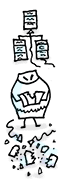
Object-Orientation Abusers
All these smells are incomplete or incorrect application of object-oriented programming principles.
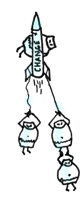
Change Preventers
These smells mean that if you need to change something in one place in your code, you have to make many changes in other places too. Program development becomes much more complicated and expensive as a result.

Dispensables
A dispensable is something pointless and unneeded whose absence would make the code cleaner, more efficient and easier to understand.

Couplers
All the smells in this group contribute to excessive coupling between classes or show what happens if coupling is replaced by excessive delegation.
Refactoring techniques
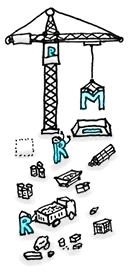
Composing methods
Much of refactoring is devoted to correctly composing methods. In most cases, excessively long methods are the root of all evil. The vagaries of code inside these methods conceal the execution logic and make the method extremely hard to understand – and even harder to change.
The refactoring techniques in this group streamline methods, remove code duplication, and pave the way for future improvements.

Moving Features between Objects
Even if you have distributed functionality among different classes in a less-than-perfect way, there is still hope.
These refactoring techniques show how to safely move functionality between classes, create new classes, and hide implementation details from public access.

Organizing Data
These refactoring techniques help with data handling, replacing primitives with rich class functionality. Another important result is untangling of class associations, which makes classes more portable and reusable.
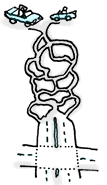
Simplifying Conditional Expressions
Conditionals tend to get more and more complicated in their logic over time, and there are yet more techniques to combat this as well.
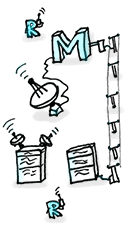
Simplifying Method Calls
These techniques make method calls simpler and easier to understand. This, in turn, simplifies the interfaces for interaction between classes.
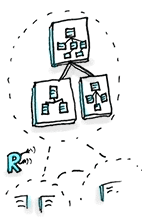
Dealing with Generalisation
Abstraction has its own group of refactoring techniques, primarily associated with moving functionality along the class inheritance hierarchy, creating new classes and interfaces, and replacing inheritance with delegation and vice versa.

Reading is boring
Aren't you bored of reading so much? Try out our new interactive learning course on refactoring. It has more content and much more fun.